

Resource Summary
-
 2 min. read
-
 23 February 2026
-
 Dementia Support Australia
Share


%20with%20the%20UK%20band%20Black%20Widow.jpg)
Lead guitarist Jim Gannon had a stellar music career over more than five decades, performing with UK bands like Black Widow and Fox and later in Australia alongside Sherbert, Jon English, Marcia Hines, Marc Holden and Doug Parkinson.
 His early career included chart success on Top of the Pops with hits like “S-S-Single Bed”, number one in the UK for ten weeks. He also toured alongside major international acts like The Who, Deep Purple, Supertramp and Chicago.
In 2019, at age 69 and still performing in Australia, Jimmy was diagnosed with a variant of frontotemporal dementia (FTD).
The impact on his life – and the lives of those closest to him – was immediate and profound.
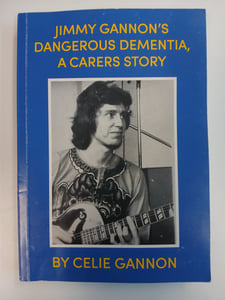 Wife Celie Gannon, 77, an entertainment journalist on Sydney’s Northern Beaches, has published a memoir of their life together before and after diagnosis, including when they met in Ronnie Scott’s jazz club in London in the early 1970s.
In Jimmy Gannon’s Dangerous Dementia: A Carers Story, Celie shares her experience caring for her husband and the behaviours that can accompany a FTD diagnosis, or specifically in Jimmy’s case Behavioural Variant FTD (bvFTD). Some of it is confronting.
Celie says she needs to show the full picture to create greater awareness of FTD, a condition also afflicting Hollywood actor Bruce Willis.
“I really hope in doing this we can get more help for the carers and loved ones,” she said.
The need for tailored support is why Dementia Support Australia launched Carer Conversations, a safe space for carers of people living with FTD to share experiences and obtain professional health advice. The nationwide proactive groups are a partnership with the Australian Fronto-Temporal Dementia Association (AFTDA).
Celie recalls a few years before his diagnosis, watching Jim become obsessed with sticking newspaper to walls while holidaying at the farm of mate and INXS member Andy Farris. There were unexplained car accidents going to gigs. All early signs.
Celie assumed Jim’s dementia would be like the Alzheimer’s disease that her mother lived with. No one prepared her for what was ahead.
Early one morning in 2021 during COVID lockdowns, Celie told of being awoken at 4am in their Beacon Hill home by “tremendous punches to my head and face”. “After what seemed like a long time, I screamed and I was now scrambling to get out of bed, but Jim was following me with the bashing,” she wrote. Her son, living at home at the time, intervened to stop the attack. Icepacks were needed for the bruising.
Celie moved to the spare bedroom permanently, but the incidents continued. As Jim’s FTD progressed and he became frailer, Celie said “the strength in his assaults became less effective and by 2024 … even I could control the aggression however, by then the outbursts were almost daily.”
In 2024, Celie made the tough decision to place Jim in residential aged care, but his behaviours were too much for the staff. Today, Jim, 78, is comfortable in another home on Sydney’s Northern Beaches equipped to manage residents with his symptoms.
“He’s much more settled now and he loves it when I read to him. I have read him parts of this book. His favourite part is our life together from when we first met and settled down. I have to agree with him,” she said.
Carer Conversations program lead Sarah Fox said FTD is an umbrella term to describe a group of younger onset neurodegenerative conditions which can impact anyone, but more typically affects people in their 40s, 50s and 60s. Carers keen to join an online group should go to dementia.com.au/carer-conversations.
Related
Resource Summary
-
2 min. read
-
23 February 2026
-
Dementia Support Australia

 Call our 24-hour helpline on

